Ingredients
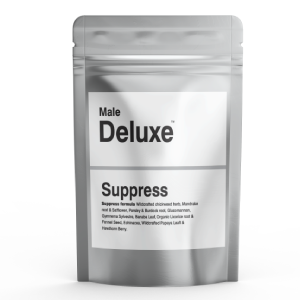
Suppress Blend 900mg: Wildcrafted chickweed herb, Mandrake root & Safflower, Parsley & Burdock root, Glucomannan, Gymnema Sylvestre, Banaba Leaf, Organic Licorice root & Fennel Seed, Echinacea, Wildcrafted Papaya Leaft & Hawthorn Berry.
* Plant derived Capsules. ** Daily Value not established.
About
Suppress De Luxe — Ingredient Profile:
Focus: How the ingredients may assist in appetite & hunger suppression mechanisms
Wildcrafted Chickweed Herb (Stellaria media)
Chickweed has a long-standing reputation in herbal medicine as a natural appetite reducer. Traditional practice involves chewing the fresh leaves or drinking chickweed tea before meals specifically to soothe hunger pangs, and herbalists have used it for centuries as a remedy for obesity and to support healthy weight management. Its saponin content is thought to create a gentle bulking, satiety-like effect in the gut, and practitioners continue to recommend it today as a mild appetite suppressant taken ahead of food.
Mandrake Root
This ingredient needs a direct flag: mandrake (Mandragora spp., and the unrelated “American mandrake”/Podophyllum peltatum sometimes sold under the same name) is not established or safety-vetted as an appetite suppressant in any clinical literature. Both plants are classified as toxic — Mandragora for its tropane alkaloids (anticholinergic effects, hallucinations, cardiac risk) and Podophyllum for podophyllotoxin (a cytotoxic, purgative compound). I’d recommend confirming with your formulator exactly which species and what part/dose is used, and whether it’s a homeopathic-level dilution, since at culinary/supplement doses neither has a credible appetite-suppression profile in the literature — and both carry real safety considerations worth being transparent about.
Safflower
Safflower’s weight-management reputation mostly comes from its oil’s conjugated linoleic acid (CLA) content, tested in a well-known Ohio State University trial in obese post-menopausal women with diabetes, which found reduced trunk fat and improved insulin sensitivity over 16 weeks. That said, this is a body-composition effect, not a documented appetite-suppression mechanism, and CLA researchers have pushed back on more dramatic “belly fat” marketing claims built on this single study. If the formula uses safflower flower/petal (as is common in “Suppress”-style blends) rather than the CLA-standardized oil, this research doesn’t directly transfer.
Parsley
Parsley has a long history as a natural diuretic herb, helping the body shed excess water weight and reduce the bloated feeling that often gets mistaken for hunger. It’s a recognised ingredient in weight-management formulations, where dehydrated parsley is combined with other botanicals specifically to support a leaner, lighter feeling day to day — a small but meaningful piece of an overall appetite-and-bloat-control strategy.
Burdock Root
Burdock is rich in inulin, a prebiotic fibre that supports digestion and may contribute to fullness by slowing gut transit. A laboratory study found burdock root extract reduced body weight in rats and activated AMPK (a cellular energy-regulating enzyme linked to fat metabolism) in human liver cells, “suggesting burdock root is expected to be useful for body weight management.” Burdock is also a traditional diuretic. Direct human satiety trials are lacking, so its role here is best framed as fibre-supported fullness plus a supportive metabolic signal from cell/animal research.
Glucomannan
This is the strongest, most clinically supported ingredient in the formula for hunger suppression. Glucomannan is a soluble fibre from konjac root that absorbs up to 10–15 times its weight in water, forming a viscous gel that slows gastric emptying and physically triggers fullness signals via vagal nerve pathways. A randomised crossover trial in the British Journal of Nutrition and multiple systematic reviews confirm it delays gastric emptying and reduces energy intake, though results across weight-loss trials specifically are mixed and dose/duration-dependent (best effects reported at ≥5g/day over 12+ weeks).
Gymnema Sylvestre
Gymnema is well-studied specifically for sugar-craving suppression. Its gymnemic acids temporarily block sweet-taste receptors on the tongue, making sugary food taste unpleasant. A 2017 Oregon trial found participants given a gymnemic acid lozenge ate 44% fewer sweets than a placebo group, and a 14-day randomised crossover trial confirmed reduced sweet-food desire and consumption in self-identified “sweet tooth” adults. This is one of the better-evidenced craving-control ingredients in the formula, though it targets sweet cravings specifically rather than overall hunger.
Banaba Leaf
Banaba’s corosolic acid has repeated human trial support for lowering blood glucose (within 60 minutes of dosing in some studies) and improving insulin sensitivity. The appetite-suppression angle is indirect: by blunting post-meal blood sugar spikes and the subsequent crash, banaba may help reduce the rebound hunger and carbohydrate cravings that follow a glucose spike — a mechanistically plausible but not independently trial-tested appetite effect.
Organic Licorice Root
Licorice’s glabridin and glycyrrhizic acid compounds have shown, in animal studies, the ability to lower leptin levels and suppress abdominal fat accumulation by activating AMPK pathways. Since leptin is a key hormone in long-term appetite regulation, this offers a plausible hormonal mechanism, but this evidence is from animal and cell models — human trials on licorice for appetite specifically are lacking. Note also that licorice root can raise blood pressure with prolonged high-dose use, so formulators typically cap dose or use deglycyrrhizinated forms.
Fennel Seed
Fennel has genuine human trial support here. A study published in Clinical Nutrition Research found overweight women who drank fennel tea reported significantly less hunger and greater fullness than a placebo group, measured on validated appetite scales. Its trans-anethole compound is thought to interact with hypothalamic satiety centres and may support leptin receptor sensitivity, though the exact human mechanism is still being characterised.
Echinacea
Echinacea is included here primarily for immune support rather than appetite control — it’s best evidenced for modestly reducing cold severity/duration and antibiotic need in respiratory infections. There is no meaningful clinical literature linking echinacea to hunger or appetite suppression; its role in this formula is better described as general wellness/immune support during a calorie-restricted phase, not a hunger-control ingredient.
Wildcrafted Papaya Leaf
Papaya leaf is prized for its rich concentration of natural digestive enzymes — papain, protease, and amylase — which help the body break down proteins, fats, and carbohydrates more efficiently. Users and herbalists widely report that this improved digestive efficiency translates into curbed cravings and better appetite control, with papaya leaf commonly described as a natural appetite suppressant that boosts metabolism while easing bloating and heaviness after meals.
Hawthorn Berry
Hawthorn’s clinical evidence base is strongest for cardiovascular health (blood pressure, cholesterol, heart failure symptoms) rather than appetite. A randomised crossover trial in Chinese patients found a trend toward less body-weight gain with hawthorn extract versus placebo, but this didn’t reach statistical significance. Its inclusion here is better framed as cardiometabolic support (useful alongside a weight-management stack) than a direct appetite suppressant.